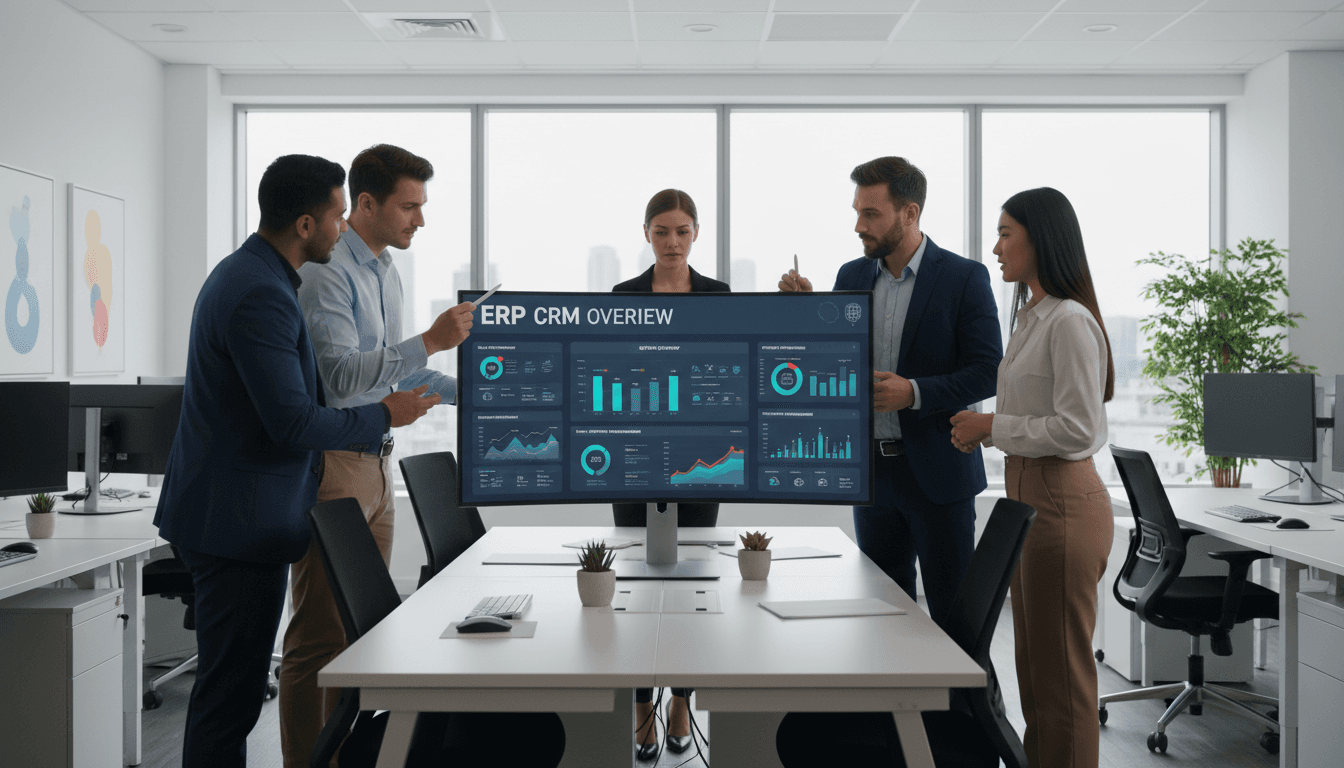
The primary difference in ERP vs CRM is that ERP systems focus on back-office operations like finance and manufacturing; meanwhile, CRM systems manage front-office activities such as sales and customer service. ERP aims to reduce costs through internal efficiency, whereas CRM seeks to increase revenue by improving customer relationships.
Many business leaders find themselves caught in a cycle of manual data entry and fragmented communication, unsure whether their primary bottleneck lies in customer acquisition or operational scale. Investing in the wrong technology stack often leads to expensive silos that hinder growth rather than fuel it. Understanding the distinction between Enterprise Resource Planning (ERP) and Customer Relationship Management (CRM) is not just a technical exercise; it is a strategic necessity for any organization aiming for sustainable expansion. One focuses on the mechanics of the front office, while the other serves as the central nervous system for back office efficiency. In this guide, we will break down the core philosophies of both solutions, compare their functions side by side, and help you determine which system your business needs first. We will also explore why integration is eventually the key to total operational clarity.
The Core Philosophy: Front Office vs Back Office
Understanding the distinction between ERP vs CRM begins with a fundamental division of labor: the front office versus the back office. Every business operates within these two spheres, and selecting the right technology requires knowing which side of the house you are trying to strengthen.
Think of your business like a local restaurant. The front office is represented by the Customer Relationship Management (CRM) system. It is the waitstaff, the lighting, the menu, and the personal greeting at the door. Its primary mission is revenue generation; it manages the customer experience, tracks preferences, and ensures guests return. Without a strong CRM, you lack the visibility needed to drive sales and grow your top line.
The back office is where Enterprise Resource Planning (ERP) takes command. In our restaurant analogy, this is the kitchen, the pantry, and the bookkeeping office. ERP manages internal processes like inventory levels, supply chain logistics, and financial reporting. Its mission is efficiency and cost reduction, ensuring that the promise made to the customer by the front office is fulfilled profitably. By streamlining business management systems, an ERP protects your bottom line by eliminating waste and manual data entry errors. While the CRM focuses on the external relationship, the ERP focuses on internal execution. Choosing between them depends on whether your current bottleneck is attracting customers or managing the production required to serve them.
What is CRM? Driving Revenue through Relationships
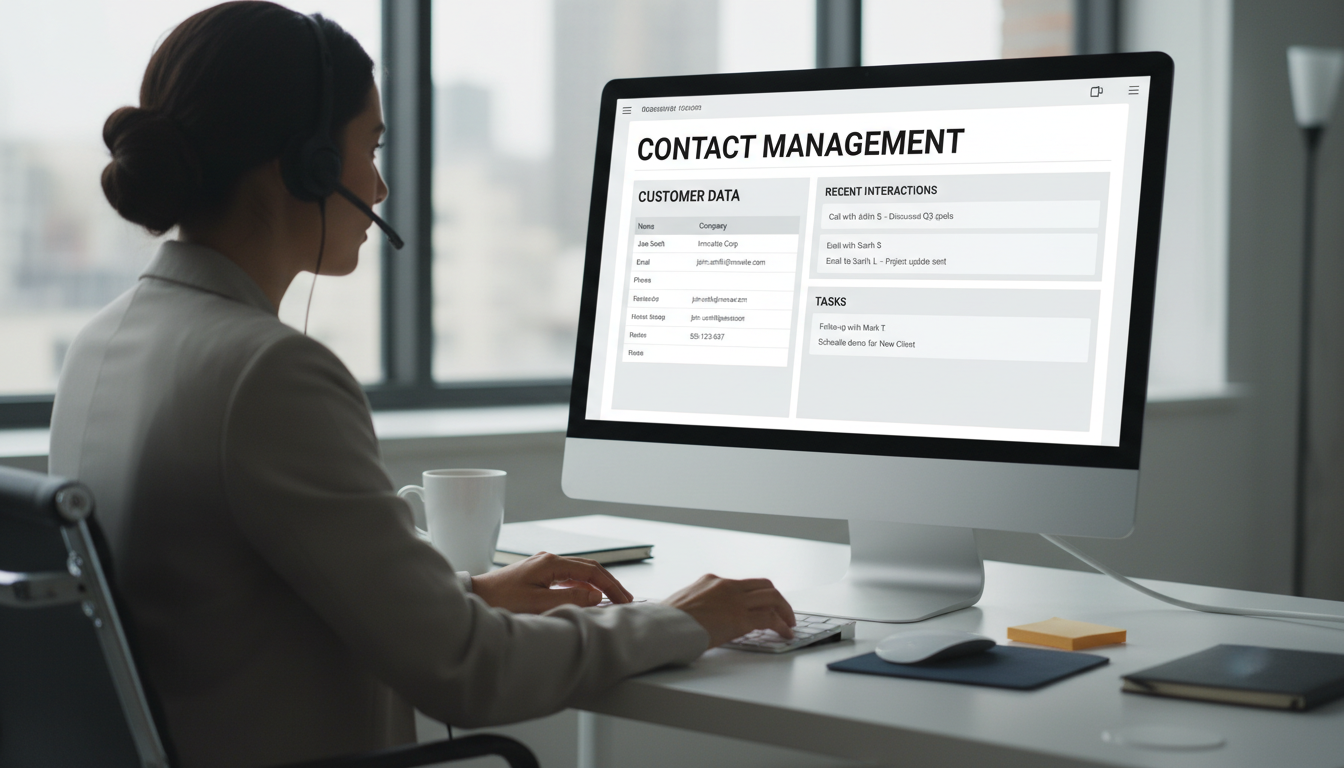
While the ERP manages your internal engine, a Customer Relationship Management (CRM) system acts as your primary driver for revenue. It is much more than a digital Rolodex or a simple contact list; it is a specialized tool designed to manage the entire customer lifecycle. A robust CRM provides a 360 degree view of every interaction, ensuring that your team has the context needed to close deals and retain clients. By centralizing these interactions, your team can leverage lead tracking and contact management to ensure no prospect falls through the cracks.
Modern CRM systems generally fall into four functional categories, each serving a specific role in growing your top line:
Operational: This focus automates front office tasks. It includes sales pipelines and marketing automation, allowing your team to move prospects through the funnel without manual oversight.
Analytical: This involves data mining to understand customer behavior. It helps you identify purchase patterns and hidden opportunities for cross selling.
Collaborative: This breaks down internal silos. It ensures that sales, marketing, and customer support departments share the same information in real time.
Strategic: This category prioritizes a customer centric business culture, focusing on long term relationship value over short term transactions.
In a practical sense, using a CRM means your sales pipeline becomes a visual map of your revenue health. You can see exactly where a deal is stalled and why. This level of visibility is what separates high growth firms from those struggling to scale. If you are unsure which functional type fits your current workflow, you can contact Juab Business Consulting for an expert assessment. Understanding these capabilities is essential in the ERP vs CRM conversation, as the CRM is what ultimately funds your operations through consistent, predictable growth.
What is ERP? Scaling Operations through Efficiency

If the CRM is the voice and personality of your company, then an Enterprise Resource Planning (ERP) system is the central nervous system. It coordinates every internal function, ensuring that the promise made to the customer can actually be fulfilled efficiently. In the ongoing discussion of ERP vs CRM, the ERP is where the hard data of execution lives. By streamlining business management systems into a single database, an ERP eliminates the dangerous data silos that occur when departments use separate, disconnected spreadsheets.
A comprehensive ERP is built upon four primary pillars that support the entire organization:
Finance: The foundation that handles automated accounting, tax compliance, and real-time financial reporting.
Human Resources: This pillar manages personnel records, benefits administration, and critical payroll integration.
Manufacturing and Supply Chain: This includes real-time inventory tracking, procurement, and production scheduling to ensure resources are never wasted.
Sales and Order Management: While the CRM tracks the lead, the ERP manages the actual transaction, fulfillment, and invoicing processes.
The primary objective of an ERP is to protect and expand your bottom line. While a CRM focuses on increasing revenue, the ERP focuses on profitability through rigorous cost control and operational visibility. When you have a single source of truth for your inventory and labor costs, you can identify waste that otherwise stays hidden in manual processes. For many growing firms in Utah, implementing an ERP is the difference between surviving and scaling. To see how these modules can be preconfigured for your specific industry, you can contact Juab Business Consulting for a detailed walkthrough of the transition process.
ERP vs CRM: A Side by Side Comparison
While they share a common goal of streamlining business management systems, the daily utility of ERP vs CRM differs significantly across your organization. A CRM is the primary workspace for sales representatives and marketing managers who need to track touchpoints and lead scores. Conversely, an ERP is the domain of accountants, warehouse managers, and production planners who require precision in financial and operational data.
Feature | CRM Focus | ERP Focus |
|---|---|---|
Primary Users | Sales, Marketing, Customer Support | Finance, HR, Operations, Logistics |
Data Type | Qualitative interactions and lead status | Quantitative transactions and inventory |
Key Metric | Customer Acquisition Cost and Lifetime Value | Profit Margin and Operational Efficiency |
Many modern ERP platforms include a CRM module, leading business owners to wonder if they can consolidate into a single tool. In practice, these built-in modules often provide basic contact management but lack the advanced automation and marketing depth of a dedicated CRM. Likewise, high-end CRMs rarely offer the rigorous ledger control or manufacturing resource planning found in a true ERP. Choosing the right path requires understanding that these systems are complementary rather than interchangeable. If your team is struggling to reconcile sales forecasts with actual inventory levels, you can contact Juab Business Consulting to evaluate whether your current software has the depth required to support your growth or if a more robust integration is needed.
Is QuickBooks a CRM or ERP?
Many business owners in Juab County ask if their existing QuickBooks subscription qualifies as a CRM or an ERP. To be clear, QuickBooks is fundamentally accounting software. However, as it has added modules for payroll and basic inventory, QuickBooks Online now functions as a 'lite' ERP for small businesses. In the ongoing discussion of ERP vs CRM, QuickBooks sits firmly on the ERP side of the fence because its primary purpose is managing the back office and the general ledger.
QuickBooks is definitely not a CRM. It lacks the capabilities for lead scoring, automated marketing workflows, and detailed relationship history required to scale a sales team. Many Utah firms reach a plateau where they outgrow these entry level tools, particularly when they require granular manufacturing data or sophisticated multi entity financial reporting. At this stage, the focus shifts toward streamlining business management systems by migrating to a full scale ERP or integrating a dedicated CRM to fill the functional gaps. For an expert assessment of your current software stack, you can contact Juab Business Consulting to discuss a transition plan that maintains your operational continuity.
Which Solution Does Your Business Need First?
Determining the starting point for your digital transformation depends entirely on your primary bottleneck. If your organization is struggling with lead follow up, inconsistent sales visibility, or declining customer retention, a CRM should be your first priority. For many startups in Juab County, the initial goal is building a sustainable customer base and generating predictable revenue. In this growth phase, a CRM provides the necessary framework to capture interest and turn prospects into long term clients.
Conversely, if your business is experiencing operational chaos, ERP implementation is the logical next step. This is common among established firms that have mastered sales but are now drowning in manual data entry, inventory errors, or significant financial reporting delays. When you cannot accurately tell which products are profitable or why shipments are consistently late, you are dealing with a back office crisis that only a centralized system can solve.
Use this decision framework to evaluate your current situation:
Choose CRM first if you need to increase your sales volume, improve marketing ROI, or centralize customer communication.
Choose ERP first if you need to streamlining business management systems to reduce costs, manage complex supply chains, or automate multi-departmental accounting.
The debate of ERP vs CRM is not about which system is better; it is about which one will provide the fastest return on investment given your specific constraints. Many local businesses find that starting with one preconfigured module allows for a smoother transition without overwhelming staff. If you are ready to identify which system aligns with your current goals, you can contact Juab Business Consulting for a strategic roadmap tailored to your operational needs.
The Power of Integration: Why You Eventually Need Both

The real magic happens when the front office and back office speak the same language. While the debate of ERP vs CRM often frames them as separate entities, the most successful Utah businesses treat them as a unified ecosystem. When these systems are integrated, a closed deal in your CRM instantly triggers an invoice, updates inventory levels, and schedules production in your ERP. This automation eliminates the human error inherent in manual data entry and ensures that your sales team never promises stock that the warehouse does not actually have.
Integrating these platforms creates a single source of truth for your entire organization. Every department, from marketing to accounting, looks at the same real-time data. This alignment prevents the friction that occurs when sales forecasts do not match financial realities. Juab Business Consulting specializes in streamlining business management systems through preconfigured, plug and play transitions. Our expertise ensures that your technology stack works as a cohesive unit from day one. By removing the technical barriers to integration, we help firms achieve a level of operational agility that is impossible with disconnected software. If you are ready to bridge the gap between your sales and operations, you can contact Juab Business Consulting to discuss a seamless implementation strategy.
Choosing between an ERP and a CRM is not about picking the best software; it is about finding the right fit for your unique business needs. Both tools offer significant benefits for efficiency and growth when implemented correctly. If you want expert help navigating these options and finding a strategy that works for you, we are ready to assist. You can learn more about how we support growing companies by visiting our Services to see how we offer tailored guidance for your success.